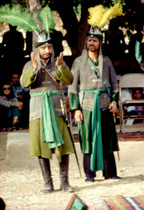
Ta'ziyeh of ImaM Hussein
Ta'ziyeh of Imam Hussein
Lincoln Center, New York
Thursday July 18, 2002
Damrosch Park Tent 8:00pm
(Damrosch Park Tent is located at the southwest corner of the Lincoln Center Plaza, at 62nd Street near Amsterdam Avenue)
Ta'ziyeh of Imam Hussein
U.S. Premiere. Charged with the passionate intensity of a dramatic spectacle, Ta’ziyeh retells the epic battle between Imam Hussein, the grandson of the prophet Mohammed, and Caliph Yazid on the Kerbala desert in 680 A.D. With centuries-old roots, Ta’ziyeh evolved into a sophisticated drama that relives powerful battle scenes, pure acts of heroism, immense suffering, and the mourning that follows. Rarely performed outside Iran, Ta'ziyeh is the only indigenous form of music drama in the Islamic world. Lincoln Center Festival 2002 presents the first authentic Ta’ziyeh performances in North America. Directed by Mohammad Ghaffari, this progressive three-play cycle consists of The Ta’ziyeh of Hor, which follows the story of one of Caliph Yazid’s generals; The Ta’ziyeh of Qusem, which recounts the marriage of the great-grandson of Mohammed just before he joins in battle; and The Ta’ziyeh of Imam Hussein, when Imam Hussein confronts his enemy in a fierce battle that ends in his brutal death. Each Ta’ziyeh is a self-contained story, but the three dramas span the 10-day battle of Kerbala. Twenty-nine of the foremost Ta’ziyeh actors and musicians from Iran perform these rich stories. Traditional music and costumes, and live animals—horses and camels—are a part of the elaborate drama. A groundbreaking theatrical event, Ta’ziyeh will provide audiences with a unique insight into the history of the Islamic and Persian cultures. Performed in Persian with a written synopsis. "[Ta’ziyeh is] one of the strongest things I have ever seen in theater...the miracle of the past becoming present."—Peter Brook, director