*forwarded email*
Iran students renew protests, call for referendum
TEHRAN, Dec 7 (Reuters) - About 3,000 Iranian students chanted "Freedom for political prisoners" on Saturday and called for a referendum on Iran's political future in the first major pro-reform rally in the capital Tehran for nearly two weeks.
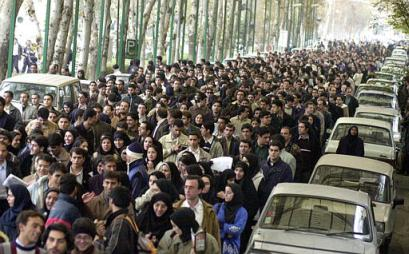
The demonstration, which coincided with National Students Day, followed two weeks of almost daily rallies by students last month, which were the biggest pro-reform protests in the Islamic Republic for more than three years.
Saturday's rally at Tehran University was marked by sporadic violence as students and hardline Islamic militia hurled stones at one another over the high university fence. At least three students received minor head wounds from stones thrown into the campus, witnesses said.
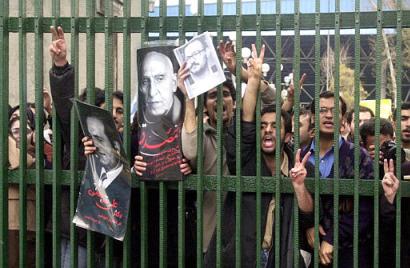
Police placed lines of buses around the university to hinder the stone throwers' and broke up groups of students milling in the streets around the campus. By early evening most of the protesters had dispersed.
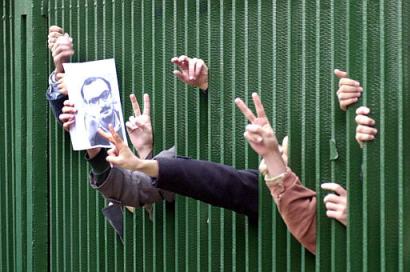
Last month's student rallies were sparked by a death sentence imposed on a reformist academic but quickly took on wider political significance, reflecting simmering tension in the country of 65 million people over the slow pace of reform.
Under Iran's complex political structure, moderate President Mohammad Khatami's efforts to improve democracy and social freedom have been largely blocked by hardliners who control key unelected institutions at the heart of the state.
"Death to the Taliban in Kabul and Tehran!" and "Referendum, referendum!" the students chanted on Saturday as they marched, clapping and whistling, around the large campus.
Student leaders, four of whom were briefly arrested last month for organising the protests, have said they plan to hold a symbolic referendum of students on Iran's political future.
"Our national interests should be determined by the direct vote of the people," said Mousavi Panah, a member of Tehran University's Islamic Students' Association.
A date and precise question for the referendum have not been set.
Reformists have urged the students to keep their protests peaceful, saying hardliners could unleash a brutal crackdown if the demonstrations got out of hand and moved out of the universities and onto the streets.
Khatami, who normally attends the National Student Day ceremonies at the university, stayed away this year.
The death sentence against history lecturer Hashem Aghajari,
imposed for his questioning of Iran's clerical rule, was appealed on Monday.