January 01, 1999
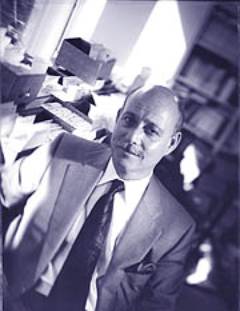
William Bridges
While assisting the
management at Intel in the late 1980s, William Bridges made a startling
discovery. Rarely did the word "jobs" come up. Rather, the point of reference
was "tasks" that needed to be assigned. Bridges thereafter began to study the
changing nature of work in the larger economy, which led to the 1994 publication
of his book JobShift. It quickly became a highly celebrated handbook for a world
of employment transition. Bridges today runs a consulting firm, William
Bridges&Associates, located in Mill Valley, Calif. The most recent of his nine
books, Creating You&Co., offers further advice for creating and managing a
21st-century career.
In JobShift you claimed that every job in today's economy is temporary.
How so?
That people who are employed in what they think of as
full-time, long-term jobs are in reality hired by their organization to work as
long as they offer value. So these are actually temporary jobs.
So it's a bit of a trick to help us rethink the nature of hired labor.
Sure, but most people still think of work in ways
shaped by the Industrial Revolution and its mass labor force. For the last
several generations most people came to think of work as a solid arrangement, as
a career.
And now we're returning to a pre-industrial concept of work?
That's right, although communications technology
changes everything. So it's a little misleading to say that we're going back,
because it's back to the future.
How exactly does communications technology alter the job landscape?
The craft system was very specific to a locale. If you
were a stellar shoemaker in London, somebody would have to travel from Paris to
get a pair of your shoes. There was no way you would serve a clientele that you
couldn't reach in person. Today, of course, that's all different. New
technologies also make it possible for fairly complicated operations to be
divided up in space and time and linked together. It used to be terribly
expensive for two different parties to cooperate in building something. They
would have to move the product from one site to the other. But now, you have
Boeing putting together the 777 with an online design—no paper—that all parties,
such as overseas manufacturers who contract a wing, can access.
One would think such trends would lead to higher levels of unemployment,
yet our unemployment rate has stayed low in the United States over the last
couple of decades. Why?
I really don't know, and I don't think anybody else
does either. The shift of work into services and into information technology
certainly plays no small part. You don't have to relocate everybody like in the
days when people were sharecroppers growing cotton in the South and they went to
Detroit to work in the auto plants. That was called a migration. We don't have
the same kind of migration going on today. The service economy has picked up an
awful lot of people. The cynical way to say it is we've created a bunch of
hamburger flippers. But it's a much more complicated process than that. Many
futurists predicted that the shift toward information technology was going to
lead to gross unemployment, to the end of work. It hasn't worked that way.
Does technology create as many opportunities for jobs as it displaces?
A lot of problems arise with the advent of
communications technology: matters of freedom and censorship, intellectual
property rights, and access for the disenfranchised who don't know how to
operate in this new age. These are very legitimate problems, but killed
opportunity is not one of them. Change doesn't kill opportunity. It relocates
it. So dealing with a rapidly changing environment requires finding where
opportunity exists, because what has disappeared in the old economy is going to
pop up in a new place. What about the argument that the only
people who will be able to work in this New Economy are specialized knowledge
workers? What happens to the mass labor force?
That's going to depend partially on public policy, how
successful we are in getting people comfortable with computers. The irony is,
putting computers in schools probably doesn't have as big an impact toward
getting young people skilled in information technology as video games do. It's
almost as though the younger generation of workers is teaching itself, and all
our talk about how we need to change education may be beside the point. I don't
see the creation of an elite [group], any more so than in past generations. When
college education was scarce, anyone who could get a B.A. was part of the elite.
It's been several years now since JobShift came out. Is there anything
in the job market that has surprised you?
Two things. One is that temporary work is really
seeping into all parts of the economy, even professional fields. It is not so
much the clerical phenomenon or the manufacturing phenomenon that I assumed it
would be. Secondly, we can no longer speak of temporary work without putting it
in the context of work distribution. The modern corporation once kept nearly all
its jobs in-house. Its workers were vertically ordered and assigned whatever
tasks were needed to produce a product. Now a company like Dell distributes the
work outside its quarters to subcontractors, to joint ventures, and to
independent professionals. And this distribution process includes groups of
temporaries who go inside the organization, too. The end is not necessarily the
virtual organization, but a company that can rethink the way it assigns
projects. "Should we do this ourselves or farm it out? Should we do this
ourselves or should we venture with another organization?" That this
distribution has gone so far surprises me. Michael Dell claims that if he did
everything in-house he would need to hire 80,000 people to equal the
productivity he presently gets out of 15,000 people.
How has our society adjusted to these employment shifts?
It has created a lot less destabilization and chaos
than I would have predicted 10 years ago. It's really quite extraordinary that
we keep going and the wheels don't fly off. But some of the long-term effects
still scare me. For instance, if we end continuous employment and move
completely toward project-contingent work, how are most of us going to handle
our mortgages?
I also wonder how it will change the relationship between employers and
their workers. We immediately recognize the potential vulnerability for the
worker. But employers who do not treat their workers well may find that they'll
walk out and take their value somewhere else.
That's right. And if the labor market continues to be
anything as tight as it has been recently, that's a real threat. This new
distribution of work makes the intellectual worker much more like a contractor,
an independent professional. If you hire a lawyer and the two of you have a
falling out, you'll both walk away, and the lawyer will go elsewhere and get
work. Intellectual workers are a lot more like that. It raises the issue whether
the old notion of protecting labor with union agreements has much meaning to it.
My deepest concern isn't about the things that worry most other social critics.
I'm more troubled that the boundaries of the job are getting so unclear that
work is eating up people's lives. Remember those classic photos of workers
leaving the auto factory in a shift change, hundreds coming out at the same
time, the workday completed? The information technology work force isn't like
that. Most people I know work around the clock, work at home, simply consumed by
their work. The joke that you hear at Microsoft is that you can work any 18
hours of the day you want. In the last decade America has managed to increase
productivity, not everywhere and not steadily, but it has increased so that even
countries that have price and wage advantages on us have trouble keeping up. And
part of it is this manic work life that people have developed.
Look ahead a decade. What trends in the work force do you anticipate?
I think we're going to continue to move in the
direction of breaking down big organizations and outsourcing work. Productivity
improvements will mean that layoffs will continue. Many people believed the
layoffs we had in the late 1980s and early '90s were just a reaction to bad
times. But these layoffs are a new phenomenon, and it's transferring people who
used to be inside big organizations to the outside. Some of them create startups
and others become temps and still others become independent professionals. This
subtle movement in the economy has resulted in a move away from the big old
company model into little clusters of companies, as well as the proliferation of
home businesses. That represents huge opportunities for small firms and
independent professionals, who will become more and more a pool of people who
get tapped for projects. That's also why I expect we'll see the emergence of
talent agencies that broker the interests of independent contractors. Companies
are no longer looking primarily for employees to fill a job, but instead look
for talent.
So just like sports figures have agents, the bright stars in the work
world will have agents to shop their wares?
Exactly. I also expect to see more associations of
independent workers. Several groups have tried but nobody has gotten it right
yet, but it will happen. Their rallying point may be about benefits or joint
purchases, or perhaps lobbying issues like trying to change the tax laws for
independent contractors. Or it may be just solidarity. The old hiring hall was a
place where you met your friends. We don't have a hiring hall, unless it's
Starbucks.
Jeremy Rifkin

Jeremy Rifkin is no
stranger to controversy. In Who Should Play God?, the 1981 book he co-authored
with Ted Howard, Rifkin predicted that test tube babies, hybrid creatures, and
genetic foods would all become a reality by the end of the century. At the time,
many scientists and policy leaders called his predictions far-fetched. Then in
1994 he set the tone for political conversation again with his international
bestseller, The End of Work, in which he warned of the decline of the global
labor force and a fundamental transformation in the nature of work. Rifkin, who
has been influential in shaping public policy in the United States and abroad,
is the founder and president of the Foundation on Economic Trends. His most
recent book, The Biotech Century, came out in 1998.
You are best known as a harbinger for the steady and inevitable decline
of jobs in the high-tech era. What kinds of jobs do these new markets generate?
We are on the cusp of the biotech century, which can
be characterized by the fusing together of the information and life science
revolutions, the shift from fossil fuels, metals, and minerals to genetic
commerce, and the shift from print to computer-based communication. These
changes are accompanied by a shift in work from mass to elite labor forces.
We're going to create all sorts of new goods and services and technologies and
products in the biotech century, and that's going to require new jobs. These new
jobs, however, won't require mass labor. You will never see thousands of workers
coming out of the factory gates at Genentech and Microsoft as you did with
General Motors and U.S. Steel.
But we haven't seen a dramatic increase in unemployment in the United
States. Has the resiliency of the job market surprised you?
Not really. If you look around the globe, unemployment
has stayed exceptionally high in virtually all countries except for the United
States and the United Kingdom. But as I noted in The End of Work, our U.S.
agencies use procedures to gerrymander lower unemployment rates and are doing so
more aggressively than I ever thought possible. Unemployment compensation claims
run out very quickly here, and if you stop looking for work, we call you a
discouraged worker and we just don't count you in the Labor Department stats.
Secondly, our labor stats do not talk about those who are underemployed. We have
part-timers, leased workers, temporary workers, on-assignment workers,
consultants, and freelancers. A rising percentage of the work force is
underemployed if you look at the number of hours worked and not just how many
people are working. So when I talk about the end of work, I really mean, at
least for the United States, the steady diminution of work, from full-time with
benefits to full-time without benefits, to part-time to just-in-time.
Is our economy adapting well to the burst in technology applications?
To me, it smells like 1928. In the early to mid-1920s,
electricity finally began to subsume steam power and as it did, a lot of
marginal workers were let go because the technology to replace them was cheaper
and more efficient. But the economy began to experience a purchasing crisis.
There wasn't enough income being distributed to empty the increased inventories.
So on the one hand, the same technologies that were cutting human labor were
providing the opportunity to increase the productive levels of goods and
services. That's the contradiction. Installment credit therefore was promoted to
convince those who were still working to buy more on credit to make up for those
who had been let go. By 1929, those who were still working were so extended on
consumer debt that the crisis hit. The rest is history. And that's my analysis
of what happens in every new technology revolution. The global crisis right now
is excess capacity, too many suppliers and not enough demand.
Whose labor is going to be affected in this new economic order?
Everybody's. We're going to see the phaseout of the
blue-collar, mass assembly line factory worker by 2020. That shouldn't surprise
us. We did it in agriculture. The majority of our workers were still on the farm
in 1865, after the Civil War, 130 years ago. Today, it's two and a half percent
of our work force, because we have very sophisticated technology producing
output with very little human labor. But that's also what is contributing to the
global economic crisis right now. The same workers who've been let go are the
same people who have consumed the goods and services. They are your clients.
They are not just a factor in the means of production. They're not only the
consumers, they're the shareholders. So when you marginalize them out of the New
Economy and replace them with more efficient, cheaper technology, you slowly
lose the purchasing power to empty inventories and long-term savings in the form
of institutional pension funds to invest in the stocks and bonds of these
companies.
In other words, we're cutting off our nose to spite our face?
Here's my bias on capitalism: It's the most brilliant
system that we'll ever devise for new opportunity. It's almost pathologically
creative, and I mean that positively. What it's not good at is distributing the
fruits, because the logic in the boardroom, from startup to big companies, is
always cut your labor costs to improve your quarterly [numbers] and your profit
margins for shareholder value.
But don't knowledge workers share in the fruits of this economy more
than the workers who lived in past eras?
If they are conceptual knowledge workers, yes; but if
they're run-of-the-mill knowledge workers, no. The classical economist will say
we've always destroyed jobs on the way to creating new ones. That's the history
of the Industrial Revolution. A lot of folks were dislocated from the farms, but
they moved to the factories, and when the factories mechanized we had a new
sector emerge, service and white-collar, and they found places there. And the
hope is that the knowledge sector will create as many new jobs as are destroyed
when we move to high-tech automation and agriculture manufacturing. The problem
is, there isn't a business leader I know that believes we can upgrade the skill
level of our work force and prepare the next generation for knowledge work.
So are we eliminating jobs that we won't be able to replace?
The industries of the 21st century won't require a
mass labor force, but they will require the best minds working together with
very sophisticated software and wetware-computer and genetic technology. An
example from genetic engineering where there is a new field called "pharming"
animals: A flock of 12 goats with a customized gene will allow it to act as a
chemical factory, secreting a human hormone or protein in its milk. One flock of
12 such goats can replace a multimillion-dollar chemical factory with hundreds
or thousands of workers. That's just one dramatic example. The same is true in
the computer and telecommunication industries. We already have software doing
what the average accountant, family diagnostician, and engineer did 10 years or
even five years ago. Why would we need garden-variety knowledge workers when
we're going to be able to rely on increasingly sophisticated technologies?
Don't you have any good news?
(Laughs) I never said all of this was bad news. What
I'm saying is that we're on the cusp of a technological revolution so profound
that it could create a great renaissance in the coming century.
So you're hopeful that these trends could lead to a better society? Or
it could be a great period of social destabilization. It could go either way?
Yes, and that's what most people haven't yet grasped.
The Industrial Age ended slave labor. The biotech century is going to end mass
wage labor. What are we going to do with everybody? We don't have a social and
political vision that is powerful enough to match these new technologies. We
can't imagine what human beings could do if they're not needed in the
marketplace or for government service.
Any suggestions?
There is a short-term transition and a long-term
response. In the short term, over the next 30 to 40 years, we have to radically
reduce the hours of work per week, and increase the pay and benefits in direct
proportion to the ability of these labor-saving technologies. That's what we did
through the Industrial Revolution. If we still had a 50-hour workweek, do you
know how many people would be unemployed? We need a 30-hour workweek and a
six-hour day, which would be a godsend for working parents. Both France and
Italy are on their way to a shorter workweek. It's in everyone's interest. More
young people share the work, bring home paychecks, buy goods and services in a
domestic economy, and pay more taxes. What's the purpose of introducing all
these labor-saving, time-saving, and highly advanced technologies into our lives
if our quality of life isn't improving and if we haven't freed ourselves for
more time with family and culture? But if you ask any businessperson when they
go to bed at night, after being assaulted with each increasing new increment of
technology, whether they feel that their family's quality of life is improving
in direct proportion to the introduction of these incredible technologies, they
will say no. It is deteriorating. That means there is a disconnect between the
tremendous potential power of the technologies and the inability to create a
social vision that would allow us to take advantage of it and create a
renaissance.
y and values.